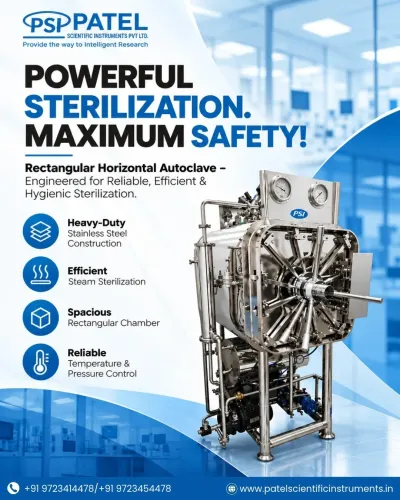
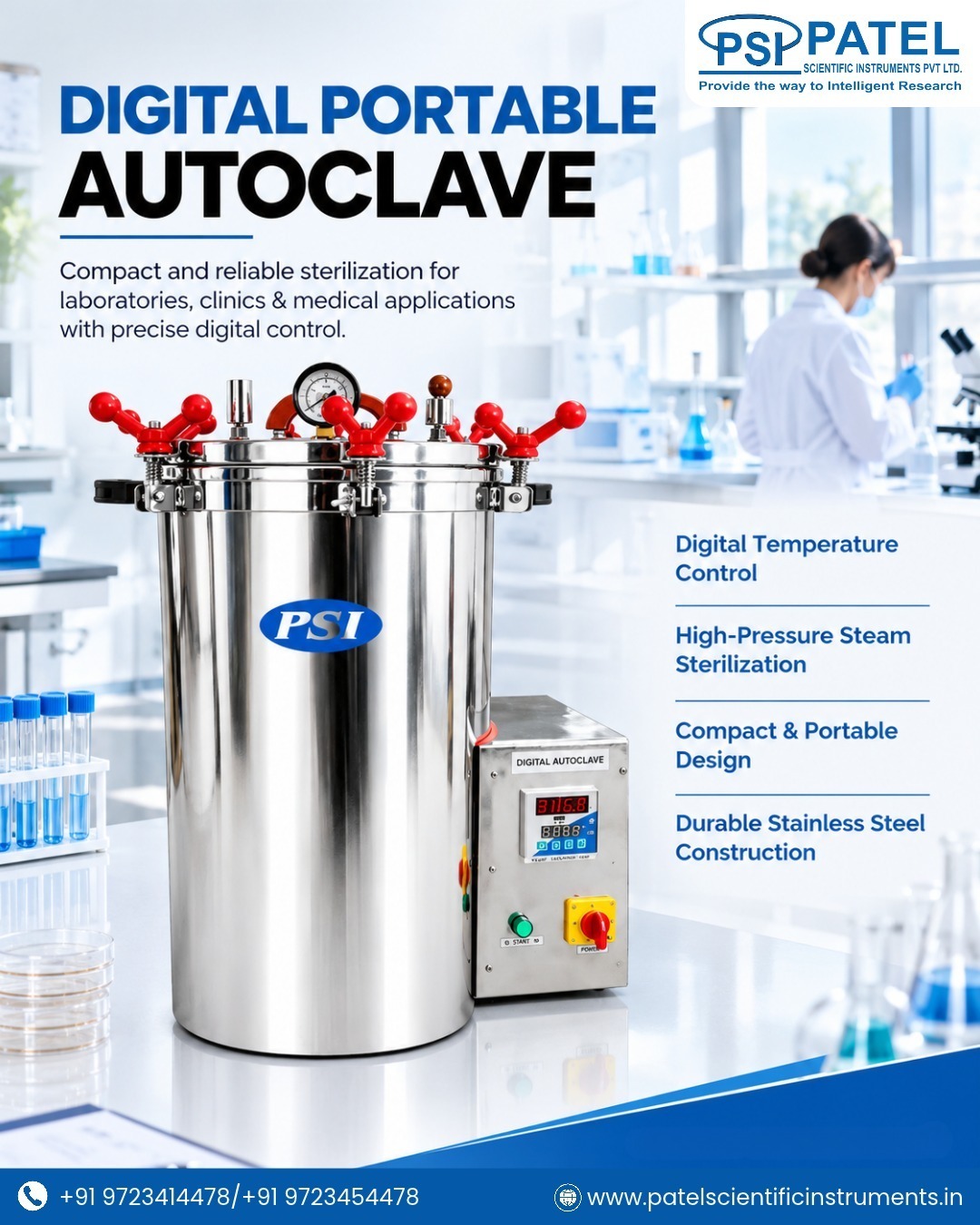
A Digital Portable Autoclave is a compact steam sterilization device that sterilizes compatible medical instruments, laboratory equipment, and other heat-resistant materials using controlled steam, temperature, and pressure. Patel Scientific Instruments Pvt Ltd provides scientific and laboratory equipment solutions for healthcare facilities, diagnostic centers, and research laboratories. As a Digital Portable Autoclave Manufacturer, the company helps customers identify suitable sterilization equipment for their operational requirements.
Key Features of a Digital Portable Autoclave
A modern Digital Portable Autoclave combines compact construction with digital monitoring to simplify sterilization procedures. Depending on the model, these systems may include programmable controls, temperature displays, cycle timers, and built-in safety mechanisms. These features help operators monitor sterilization parameters and manage routine sterilization tasks efficiently.
Important features to consider when selecting a digital portable autoclave include:
· Digital Control Panel: Displays operating parameters and allows convenient cycle management.
· Stainless Steel Chamber: Provides durability, corrosion resistance, and hygienic operation when made from suitable materials.
· Temperature and Pressure Monitoring: Helps operators monitor the conditions required for the selected sterilization cycle.
· Programmable Timer: Allows operators to adjust cycle duration based on the equipment design and intended application.
· Safety Protection: Depending on the model, safety features may include low-water protection, pressure-release mechanisms, and automatic power cut-off.
· Compact Design: Makes the equipment suitable for facilities that require a space-efficient sterilization solution.
· Choosing the right Digital Portable Autoclave Manufacturer is important to find equipment that meets your required capacity, operating conditions, and safety standards.
Technical Specifications of a Digital Portable Autoclave
Digital Portable Autoclave specifications vary by model and manufacturer. Before purchasing, review the following parameters to ensure the equipment suits your application.
· Chamber Capacity: Available capacities depend on the model and may include compact options for smaller sterilization loads.
· Chamber Material: Stainless steel is commonly used for durability and corrosion resistance.
· Operating Temperature: Some models support sterilization cycles around 121°C or 126°C, depending on their design and validated operating settings.
· Working Pressure: Pressure requirements vary by selected sterilization temperature and equipment specifications.
· Control System: Digital displays and microprocessor-based controls may be available for cycle monitoring and adjustment.
· Safety Features: Confirm pressure protection, low-water safeguards, and other model-specific safety systems.
As a Digital Portable Autoclave Manufacturer, Patel Scientific Instruments Pvt Ltd encourages customers to check the relevant product specifications, operating instructions, and applicable compliance requirements before selecting equipment.
Applications of Digital Portable Autoclaves
A Digital Portable Autoclave can be useful in facilities that need controlled steam sterilization in a compact format. Depending on the chamber size, validated cycle, and instrument compatibility, applications may include:
· Dental Clinics: Sterilization of compatible dental instruments.
· Medical Facilities: Processing suitable reusable medical instruments.
· Diagnostic Laboratories: Sterilization of compatible laboratory equipment and materials.
· Research Institutions: Supporting laboratory sterilization procedures.
· Educational Laboratories: Sterilization of appropriate teaching and experimental materials.
· Small Healthcare Centers: Providing a compact sterilization option that meets clinical requirements.
When choosing a Digital Portable Autoclave Manufacturer, healthcare and laboratory professionals should confirm the selected model fits the intended load and follows required sterilization protocols.
How to Choose the Right Digital Portable Autoclave
Selecting a suitable Digital Portable Autoclave involves more than comparing prices. Consider these factors before making a purchase:
· Capacity Requirements: Choose a chamber size that accommodates your typical load.
· Digital Controls: Look for controls that make cycle selection and monitoring convenient.
· Material Compatibility: Confirm that the instruments and materials can withstand the selected steam sterilization cycle.
· Safety Mechanisms: Review pressure protection, water-level monitoring, and other available safeguards.
· Maintenance Requirements: Check cleaning procedures, servicing needs, and spare-parts availability.
· Technical Documentation: Verify operating instructions, applicable certifications, and cycle validation information.
Working with a reliable digital portable autoclave manufacturer helps your facility evaluate equipment features and select a solution that meets your sterilization requirements.
Contact Patel Scientific Instruments Pvt Ltd to discuss your requirements and find the right sterilization equipment.
Frequently Asked Questions (FAQs)
1. What is a digital portable autoclave used for?
A Digital Portable Autoclave uses pressurized steam to sterilize compatible medical instruments, laboratory tools, and heat-resistant materials. The appropriate cycle depends on the items being processed and the manufacturer’s validated instructions.
2. What capacity should I choose for a digital portable autoclave?
The appropriate capacity depends on the size and quantity of instruments you sterilize during each cycle. Smaller facilities may need a compact chamber, while laboratories with larger loads may require greater capacity.
3. How do I select a digital portable autoclave manufacturer?
When selecting a Digital Portable Autoclave Manufacturer, compare chamber capacity, digital controls, safety features, technical specifications, documentation, maintenance support, and suitability for your intended sterilization applications.
Keywords